
IT Infrastructure Relocation Checklist | 100 Critical Planning Steps
Planning an IT infrastructure relocation? This guide covers the key risks, planning considerations and a 100-point relocation checklist to help ensure a successful server room or data centre move.
Introduction
Relocating IT infrastructure is one of the most complex operational projects an organisation can undertake. Moving servers, storage systems, networking equipment and supporting infrastructure to a new location requires careful planning to avoid downtime, data loss or operational disruption.
An IT infrastructure relocation involves far more than physically moving equipment. Power capacity, cooling, network connectivity, backup systems and operational dependencies must all be validated before infrastructure is moved.
Without proper preparation, organisations risk unexpected outages, misconfigured networks or delayed project timelines.
To help IT teams prepare, Focus Group Technologies has developed a 100-Point IT Infrastructure Relocation Checklist covering the key areas that should be reviewed before any infrastructure move.
Why IT Infrastructure Relocations Are Complex
IT relocations require coordination across multiple technical and operational disciplines.
Typical challenges include:
- Identifying infrastructure dependencies across servers, networking and storage
- Ensuring power and cooling capacity in the new environment
- Managing network configuration changes including DNS, IP addressing and VPN connectivity
- Coordinating multiple vendors such as electricians, cablers, facilities teams and telecom providers
- Validating backup and disaster recovery readiness before the move
Relocations are rarely routine projects. In many organisations they occur only once every several years, which means internal teams may not have recent experience planning and executing a full infrastructure relocation.
What Should Be Included in an IT Infrastructure Relocation Checklist
A structured relocation checklist ensures that every component of the infrastructure environment is reviewed before the move begins.
The most important areas to validate include:

Planning and Project Governance
Every relocation project should begin with a structured plan.
Key planning considerations include:
- Project timeline and relocation window
- Assigned project manager
- Stakeholder communication plans
- Support escalation processes
- Documentation of critical IT systems
Planning ensures the relocation is coordinated and reduces the likelihood of unexpected disruptions during the move.

Network and Connectivity Dependencies
Network configuration is often one of the most complex aspects of an infrastructure relocation.
Organisations must review:
- Project timeline and relocation window
- Assigned project manager
- Stakeholder communication plans
- Support escalation processes
- Documentation of critical IT systems
Failure to validate network dependencies can result in systems being moved successfully but remaining inaccessible after relocation.

Server Room and Data Centre Environment
The destination environment must be validated to ensure it can support the infrastructure being relocated.
Important considerations include:
- Server room location and security
- Fire suppression systems
- Rack capacity and layout
- Structured cabling
- Environmental monitoring
Cooling capacity and air quality are also critical factors in maintaining system stability after relocation.

Power and Cooling Requirements
Power infrastructure must be carefully assessed to ensure the new environment can support production workloads.
Checklist items typically include:
- UPS capacity and runtime
- Standby generator availability
- Transfer switch configuration
- Cooling capacity and redundancy
- Temperature and humidity monitoring
Power or cooling issues discovered after relocation can lead to immediate operational problems.

Backup and Disaster Recovery Validation
Before relocating infrastructure, organisations should confirm that data protection systems are functioning correctly.
Recommended validation steps include:
- Reviewing backup configurations
- Performing test restores
- Validating disaster recovery procedures
- Ensuring offsite or cloud backups are available
This ensures systems can be restored if unexpected issues occur during the relocation process.
What Should Be Included in an IT Infrastructure Relocation Checklist
A structured relocation checklist ensures that every component of the infrastructure environment is reviewed before the move begins.
The most important areas to validate include:
- Reviewing backup configurations
- Performing test restores
- Validating disaster recovery procedures
- Ensuring offsite or cloud backups are available
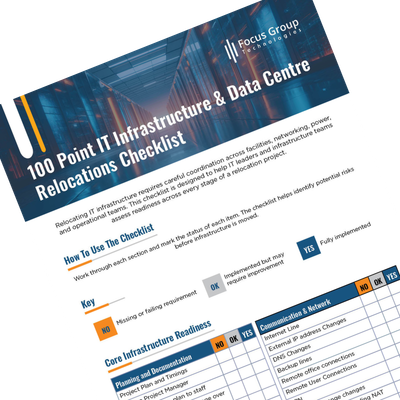
Download the 100-Point IT Infrastructure Relocation Checklist to assess your relocation readiness.
When to Engage Relocation Specialists
In many cases organisations rely on internal teams to coordinate infrastructure relocations. However, complex environments often benefit from structured relocation planning support.
Specialist relocation providers can assist with:
- Dependency mapping
- Infrastructure readiness validation
- Relocation project management
- Vendor coordination
- Controlled move execution
This approach reduces risk and ensures systems remain operational during and after the relocation.
IT Infrastructure Relocation Services
Focus Group Technologies supports organisations across Australia with structured IT infrastructure relocation planning and execution.
Our engineering-led approach integrates infrastructure, facilities, power, cooling and connectivity planning into a coordinated relocation framework designed to minimise operational disruption.
If you are planning an office relocation, server room move or data centre transition, our team can help assess readiness and ensure your infrastructure is prepared for relocation.
Planning an IT Infrastructure Relocation?
Download the 100-Point IT Infrastructure Relocation Checklist to assess your environment before the move begins.
Or speak with the Focus Group Technologies team for guidance on planning and executing your relocation project.