
Insights

Power Planning for Modern Servers: Why Yesterday’s Server Room May Not Support Tomorrow’s Workloads

Power planning for modern servers has become a critical consideration as organisations adopt higher-density virtualisation, GPU acceleration and AI workloads. Many existing server rooms may no longer have the power, cooling or rack capacity to support new infrastructure without upgrades.

Power Planning for Modern Servers

For many organisations, server room power planning has not changed much over the past decade. A new server was ordered, connected to available power, and added to the rack. In most cases there was plenty of capacity available.

That assumption is rapidly becoming outdated.

Modern servers are significantly more powerful than their predecessors, supporting larger CPU counts, higher memory capacities, increased storage density, and increasingly, GPU acceleration for AI, analytics, visualisation, and high-performance computing workloads.

As organisations explore AI, machine learning, VDI, data analytics, and other compute-intensive applications, power consumption is becoming one of the most overlooked constraints in infrastructure planning.

Power planning for modern servers has become an essential part of infrastructure design as organisations transition to higher-density compute environments.

Before investing in new infrastructure, IT managers should understand how server power requirements have changed and what this means for their server rooms, racks, UPS systems, and cooling infrastructure.

How Power Planning for Modern Servers Has Changed

Five years ago, a typical virtualisation host might have looked something like this:
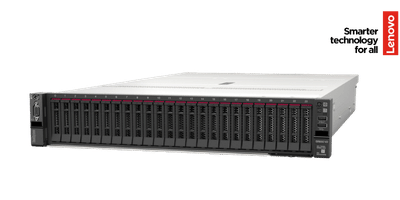
A rack containing ten servers of this type would typically consume between 4kW and 6kW. Add some switches and supporting devices, and most server rooms could

Modern Virtualisation Servers

Today's virtualisation environments often consolidate significantly more workloads onto fewer hosts.
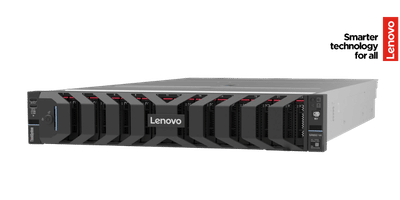
While these systems deliver dramatically higher performance, they can consume nearly double the power of similar systems deployed only a few years ago.

Adding GPUs Changes Everything

The largest shift in infrastructure power planning is the adoption of GPUs.

Many organisations are investigating:

The following example demonstrates how power planning for modern servers has evolved as virtualisation platforms become more powerful and workloads continue to grow.
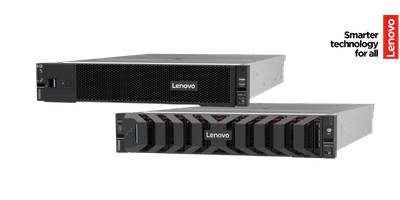
EXAMPLE: Single GPU Server

Lenovo ThinkSystem SR650/SR665

Enterprise GPU server for AI infrastructure planning

Example Configuration

Typical Power Consumption

In many environments this remains manageable.

EXAMPLE: Multiple GPU Server

Lenovo ThinkSystem SR650/SR665

Enterprise GPU server for AI infrastructure planning

Example Configuration

Power Requirements:

A single server can now consume as much power as three or four traditional virtualisation hosts from only a few years ago.

Rack Power Density Is Increasing

Five years ago, many mid-market racks operated comfortably at:

Today we regularly see designs targeting

AI and GPU environments may exceed:

This creates challenges beyond simply supplying electricity.

Higher rack densities increase:

A server room that comfortably supported ten virtualisation hosts in 2021 may require significant upgrades before supporting modern AI infrastructure.

Understanding 10A and 15A Circuits

Many Australian server rooms were originally designed around standard 10A circuits.

10A Circuit @ 240V has a theoretical maximum: 2.4kW
Recommended continuous load (80% rule): Approximately 1.9kW

15A Circuit @ 240V has a theoretical maximum:  3.6kW
Recommended continuous load (80% rule): Approximately 2.9kW

What does this mean in practice?

A dual-GPU AI server consuming 1.8kW may almost fully utilise an entire 10A circuit by itself. Adding a second similar server could require a dedicated 15A circuit or larger power infrastructure.

Questions Every IT Manager Should Ask

Before purchasing new servers, organisations should evaluate:

Power

UPS Infrastructure

Cooling

Rack Capacity

Future Growth

Need help with power planning for modern servers?

Before investing in new infrastructure, let our specialists assess your power, cooling and rack capacity to identify potential constraints and recommend the right solution.

Talk to a Power Specialist

Final Thoughts

CPU performance continues to increase, but the real change in infrastructure planning is the rise of GPU-accelerated workloads.

Many server rooms were designed around workloads that consumed a few hundred watts per server. Modern virtualisation hosts often exceed 1kW, while AI-focused systems can approach 2kW or more.

Power, cooling, and rack capacity are rapidly becoming critical design considerations rather than afterthoughts.

Organisations considering server refreshes, AI initiatives, VDI projects, or GPU deployments should evaluate their power and environmental infrastructure before new equipment arrives.

The question is no longer whether the server will fit in the rack.

Effective power planning for modern servers should now be considered a core part of every server refresh and infrastructure modernisation project.

The question is whether the rack, power, and cooling infrastructure can support the server.

Key Takeaways

Modern servers consume significantly more power

GPUs dramatically increase infrastructure demands

Power planning extends beyond the server

Plan for future growth, not just today’s requirements

Frequently asked questions

How much power does an AI server use?

The answer depends heavily on the server configuration and GPU selection.

A traditional virtualisation server may consume between 500W and 1,000W under normal load. An AI server equipped with one or more GPUs can consume anywhere from 1,000W to over 3,000W.

Understanding the actual workload is critical when planning power, cooling, UPS capacity, and rack space.

Sometimes, but not always.

Many mid-market server rooms were originally designed around infrastructure consuming 3kW–5kW per rack. Modern AI workloads can quickly push rack densities beyond 10kW and, in some cases, beyond 20kW.

Common limitations include:

Before deploying AI infrastructure, organisations should conduct a power, cooling, and capacity assessment.

Rack power density refers to the amount of electrical power consumed within a single rack, typically measured in kilowatts (kW).

Examples include:

Rack Type                                                    Typical Power Density

Traditional server rack (2020)             3–5kW

Modern virtualisation rack                   5–10kW

GPU-enabled rack                     1            0–20kW

Large AI training rack                               20kW+

Higher rack density usually requires enhanced cooling, larger UPS systems, and more robust electrical infrastructure.

A standard Australian 10A circuit provides approximately 2.4kW of total power capacity.

For continuous operation, most designers limit utilisation to around 80%, leaving approximately 1.9kW of usable capacity.

Examples:

Actual capacity should always be validated against real-world power measurements and local electrical standards.

Yes. AI and GPU servers can consume several kilowatts each, significantly increasing UPS sizing requirements and reducing available battery runtime. UPS capacity should always be reassessed before deploying high-density AI infrastructure.

Organisations should consider 15A circuits when:

A 15A circuit provides approximately 50% more capacity than a standard 10A circuit and is increasingly common in modern server room deployments.

Almost all power consumed by a server ultimately becomes heat.

As a rough guide:

As power consumption increases, cooling requirements increase proportionally. Many organisations discover that cooling becomes the primary constraint before power capacity is exhausted.

A basic AI readiness assessment should review:

Many organisations discover that infrastructure upgrades are required before deploying AI workloads at scale.

The most common mistake is focusing exclusively on GPU specifications while overlooking the supporting infrastructure.

AI projects often begin with questions such as:

“Which GPU should we buy?”

In reality, successful deployments require consideration of:

The GPU is often the easiest part of the project. Supporting it reliably over the next three to five years is where most organisations face challenges.

There is no single answer.

Cloud AI platforms can offer rapid deployment and lower upfront costs, while on-premises infrastructure may provide advantages in

Many mid-market organisations are adopting a hybrid approach, using cloud-based AI services where appropriate while deploying selected workloads on-premises where data sensitivity, performance, or economics justify the investment.